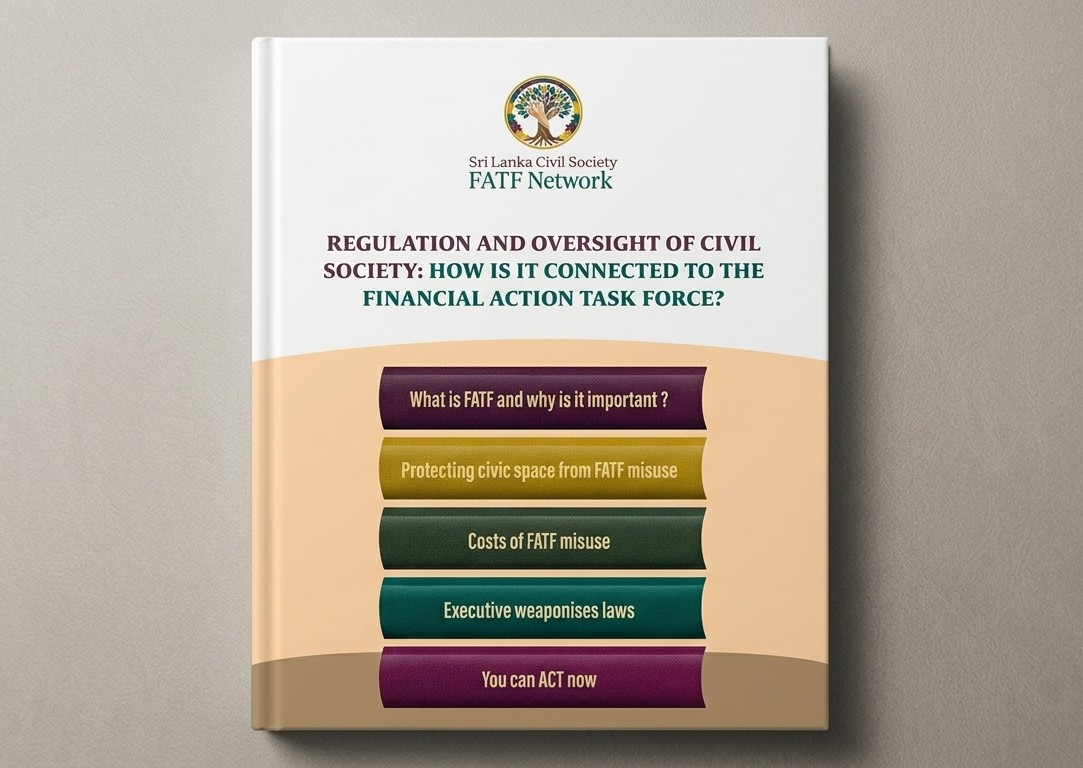
Regulation and Oversight of Civil Society: How is it Connected to the Financial Action Task Force (FATF)?
FATF is the global body that sets standards for policies to combat money laundering and terrorist financing (AML/CFT). Failing to comply with FATF standards can have negative consequences for a country, such as being grey listed, which will adversely impact its economy.
The government of Sri Lanka is using FATF to impose blanket and arbitrary restrictive regulatory measures on NGOs that restrict their access to banking services and funds. This not only disrupts their legitimate operations but also harms the vulnerable communities they serve. The proposed law reforms will place disproportionate administrative burdens on banks and other financial institutions as well.
As Sri Lanka is undergoing an assessment (called a mutual evaluation) by FATF this year, we are raising awareness on this process and how to advocate for AML/CFT policies that adhere to FATF standards.
This explainer tells you:
✅What is FATF is and why it matters
✅Whether GoSL’s AML/CFT policies contravene FATF.
✅How FATF Recommendation 8 protects civil society
✅The costs of misusing FATF
✅Proposed amendments to AML/CFT laws that do not adhere to human rights standards and place disproportionate administrative burdens on banks and other financial institutions
✅What you can do to counter this